Trapping the Accenture Breach: Catching Cloud Credential Theft Before EDR Reacts
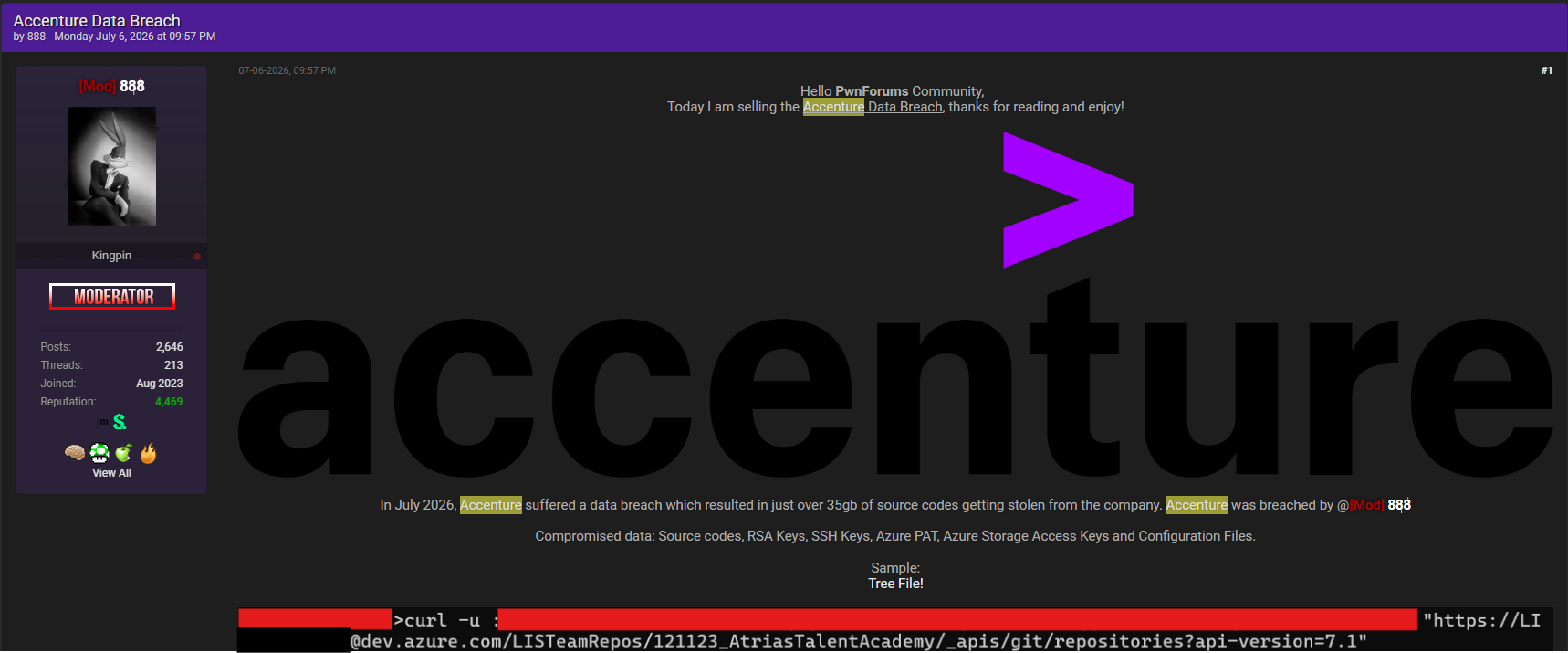
On July 6, 2026, a threat actor known as “888” advertised the sale of 35GB of source code and internal data allegedly stolen from Accenture. While Accenture stated the incident was an “isolated matter” that has been remediated, the evidence provided by the attacker serves as a masterclass in modern lateral movement and exposes the massive blind spot of traditional Endpoint Detection and Response (EDR).
The stolen dataset didn’t just contain proprietary code; it included RSA keys, SSH keys, Azure Personal Access Tokens (PATs), and Azure Storage access keys. To prove their access, the attacker published a screenshot showing a live git clone operation pulling a private repository named 121123_AtriasTalentAcademy from an Azure DevOps endpoint.
This attack highlights a critical vulnerability in how we defend developer environments.
Why Traditional EDR Fails Against Credential Scraping
When an attacker or an infostealer gains initial access to a developer’s machine, their first move is rarely to launch complex, noisy malware. Their immediate goal is to silently harvest credentials. They run simple scripts to sweep the local file system for .ssh directories, configuration files, and cloud access tokens.
EDR tools routinely fail to flag this activity for a simple reason: it looks exactly like standard developer behavior.
A script executing cat ~/.azure/credentials or reading an RSA key blends perfectly into the daily noise of compiling code and authenticating to cloud services. Furthermore, when the attacker uses that stolen Azure PAT to run a git clone against dev.azure.com, it appears as legitimate traffic authorized by a valid token. By the time behavioral heuristics catch up and flag an anomaly, the 35GB of source code has already been exfiltrated.
The HoneyWire Solution: Alerting Before the Clone
We cannot rely on analyzing behavioral anomalies when the attacker is using valid credentials and legitimate tools. We have to trap them at the point of the credential harvest.
By deploying HoneyWire File Canaries across your developer fleet, you inject highly attractive, fake secrets such as dummy Azure PATs and RSA keys into the local environment. Because these specific files are completely decoupled from your actual business operations, no legitimate process will ever attempt to read them.
The exact millisecond an attacker’s automated script sweeps the disk and touches the fake Azure PAT, HoneyWire triggers a 100% high-fidelity alert. The trap springs before the attacker even has a chance to formulate their curl request to Azure DevOps.
Simulating the Attack Path
Here is how you can use HoneyWire to build the exact trap needed to catch the techniques that were probably used in the Accenture breach.
1. Deploy the Deception Container
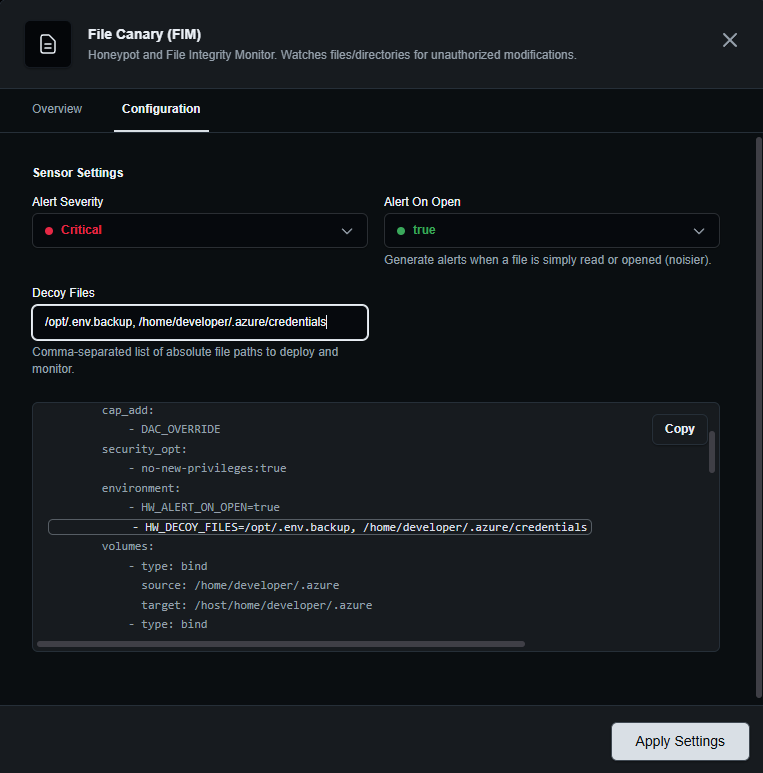
Configure the File Canary trap on your developer endpoint from the HoneyWire HUB.
2. Bait the Trap with Azure Secrets
Configure the file canary to mimic the exact targets “888” hunted for.
Decoy Content: Populate the canary files with mock credentials, so the files don’t show up as empty.
echo "77bf9a03-4512-400-123a-83217" > /home/developer/.azure/credentials
echo "77bf9a03-4512-400-123a-83217" > /opt/.env.backup
Finish setting up: Simply run
honeywire applyon the host to apply the Hub configuration, and you have set your traps.
HoneyWire seamlessly isolates this trap within a least privilege distroless Docker container, monitoring the files at the kernel level.
3. The Attacker’s Mistake
An attacker gains access and attempts to scrape the machine for cloud secrets to prepare for lateral movement.
cat /home/developer/.azure/credentials
cat /opt/.env.backup
Caught.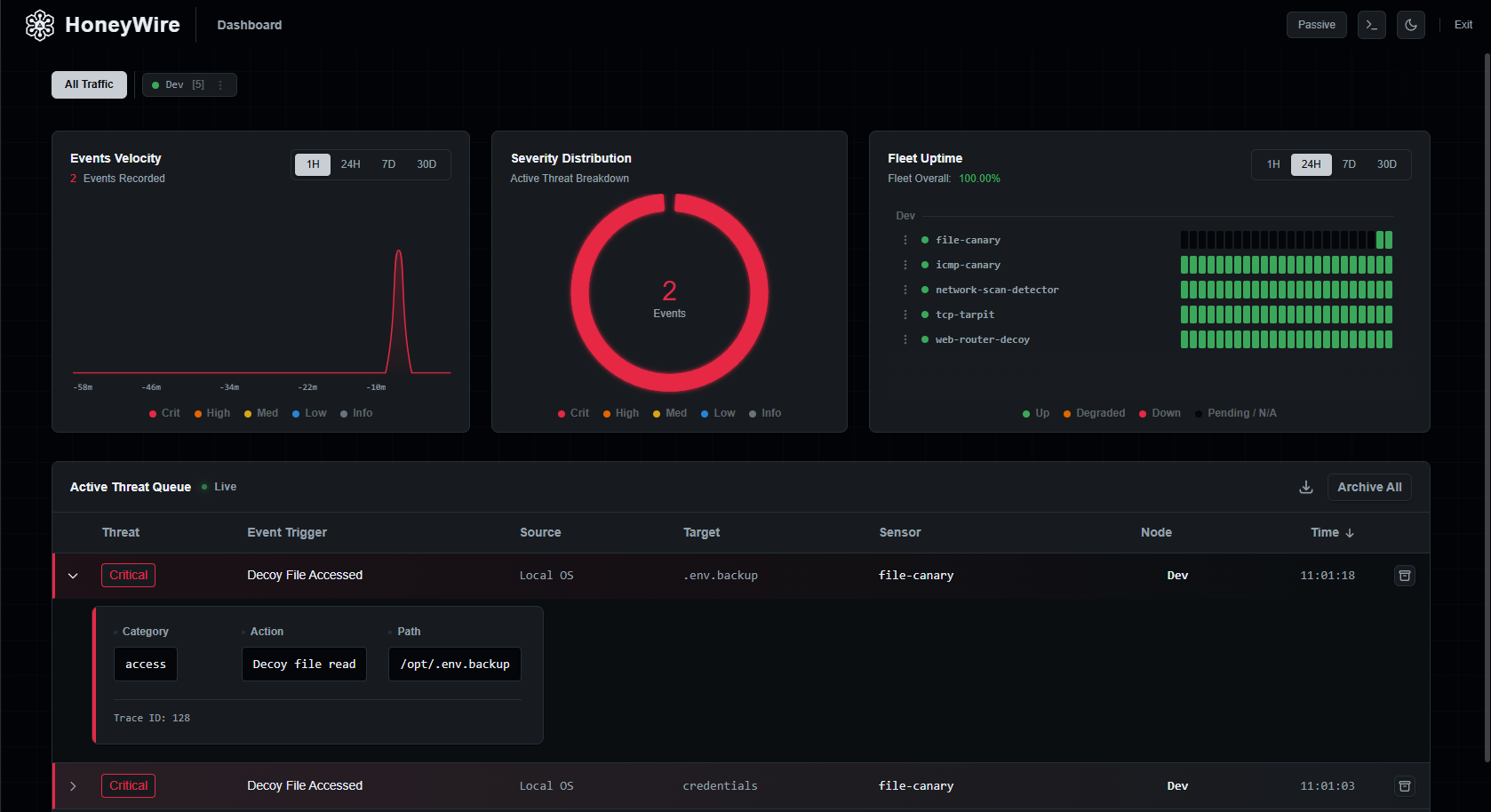
4. The Instant Alert
Instead of waiting for an EDR to analyze the subsequent git traffic, HoneyWire fires instantly upon the read event. If you integrated honeywire with your infrastructure, the hub will also forward the alert to your SIEM of choice, allowing you to isolate the compromised developer machine before a single byte of source code leaves your network.
Conclusion: The Deception Advantage
Traditional EDRs will always struggle with credential harvesting because they are forced to distinguish between legitimate developer actions and malicious ones. Deception technology elegantly bypasses this problem. By placing fake secrets that no legitimate process or employee should ever touch, you flip the script on the attacker, the moment they attempt lateral movement, they trip a deterministic, high-fidelity wire.
HoneyWire’s completely frictionless deployment makes turning your Linux infrastructure into a minefield incredibly easy and 100% free. Stop waiting for threat actors to authenticate with stolen keys, deploy your first trap today.